
Updated September 22, 2026. We may earn a commission from qualifying links. This guide does not claim that an AI camera diagnoses disease or prevents emergencies. Changes in stool, appetite, hydration or behaviour require veterinary advice—urgently when symptoms are severe.
SiiPet LitterLens is a camera designed to add a health-and-visit record to an existing litter box. The responsible reason to consider it is convenience in observing trends across one or more cats, not an expectation that an app can determine the cause of a medical problem. Review alerts, save relevant observations and contact a veterinarian when a cat’s condition is concerning.
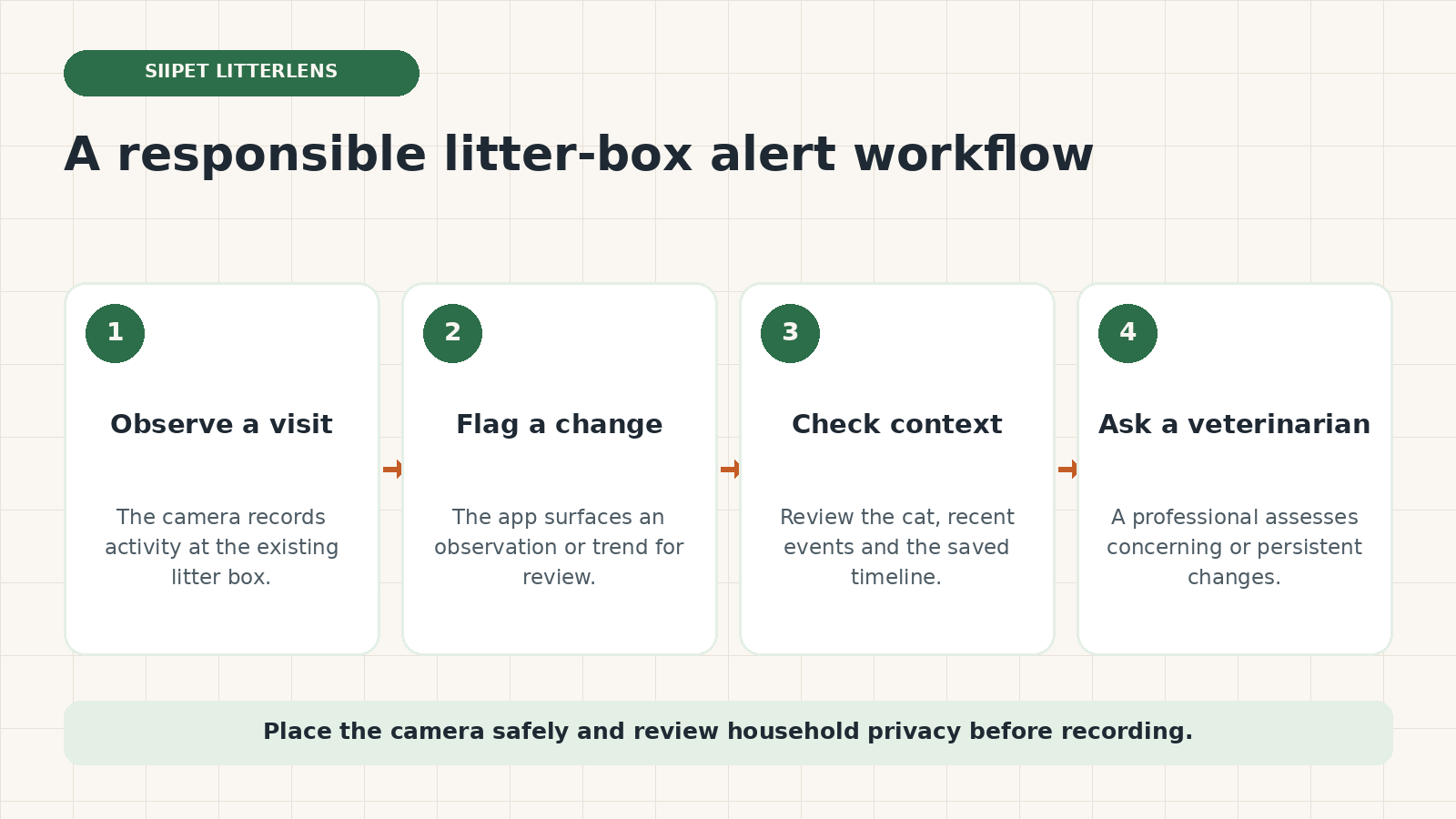
How to read this diagram: The diagram distinguishes what the camera and app can record from what requires human and veterinary judgement. An alert leads to a review of the cat, recent context and saved observations; persistent or concerning changes go to a veterinarian. Placement should not obstruct the litter box, and household privacy should be considered before recording.
What LitterLens publishes
| Published feature | What it means in practice |
|---|---|
| 1080p camera | SiiPet lists 1080P at 15 fps and a 134° vertical / 84° horizontal field of view. |
| Connectivity | The product page lists 2.4 GHz Wi‑Fi and Bluetooth. Check home network compatibility before purchase. |
| Power | SiiPet lists a 5,000 mAh battery and USB‑C input; runtime depends on recording use and temperature. |
| Multi-cat records | The vendor promotes multi-cat recognition and individual health logs; verify fit and accuracy during the return window. |
| Health alerts | Alerts are observational prompts, not a diagnosis or a substitute for a physical examination. |
Placement and privacy come first
The camera needs a clear, stable view without interfering with the cat’s normal access. SiiPet says LitterLens can fit a current litter box, but its help material should be checked for mounting constraints and box compatibility. Decide where video is stored, who can access the account and how long footage is retained before installing any connected camera. A camera in a private household space should be treated as a privacy decision as well as a pet-tech purchase.
How to use alerts safely
Use a camera alert to look at the cat and the litter box, not to self-diagnose. A change in stool or bathroom frequency can be important, but it has many possible causes. Bring dated observations, photos or exported records to a veterinarian if requested. Seek prompt care for signs such as straining to urinate, repeated unproductive attempts, blood, collapse, severe lethargy or a cat that appears acutely unwell.
Who should consider it
It can suit a multi-cat household that wants a single place to review visits, or an owner whose veterinarian has asked for longitudinal observations. It is not an essential device for every cat and should never delay care. For an official offer and compatibility information, see SiiPet LitterLens. For automatic waste handling rather than camera monitoring, read our Neakasa M1 guide.
FAQ
Can LitterLens diagnose kidney disease or IBD?
No. A camera may help document observations, but diagnosis requires a veterinarian and appropriate examination or testing.
Does it work with every litter box?
No. Check SiiPet’s placement requirements and the specific box geometry before buying.
Does it need Wi‑Fi?
SiiPet lists 2.4 GHz Wi‑Fi and Bluetooth. Confirm your network and feature requirements on the current product page.