
Updated September 22, 2026. We may earn a commission from eligible links. This page is not medical advice and does not claim that a collar prevents emergencies, diagnoses pain, or replaces veterinary care. Verify pricing, plans and availability with PetPace.
PetPace 3.0 is a connected health-monitoring collar for dogs and cats. It may be relevant for an owner who wants longitudinal data to share with a veterinary professional, but it should be evaluated as a data-collection device—not as a clinical verdict. If a pet has laboured breathing, collapse, severe lethargy or another urgent symptom, contact a veterinarian or emergency service immediately.
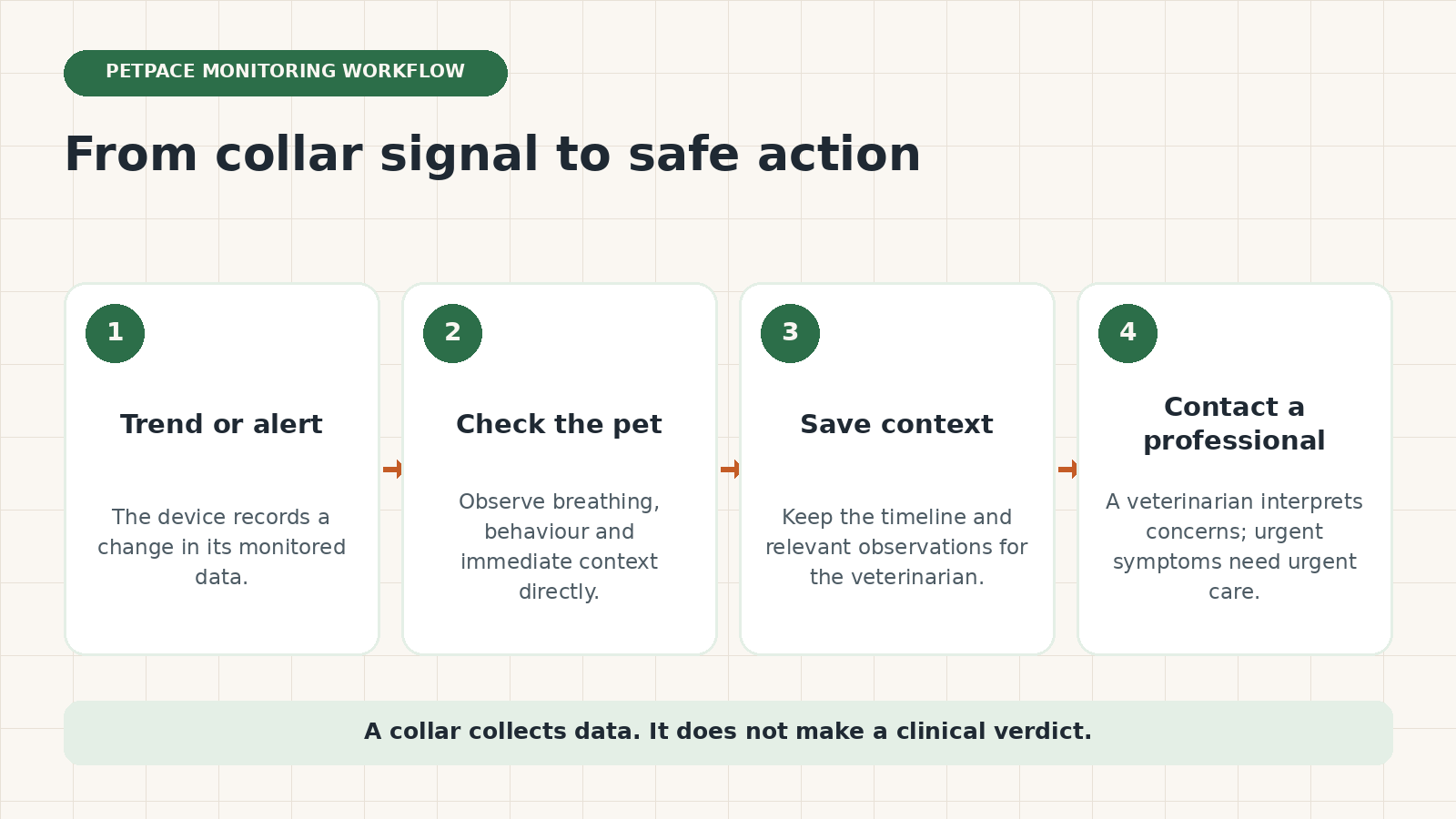
How to read this diagram: The diagram shows a collar alert as the beginning of observation, not a diagnosis. The owner checks the animal and immediate context, preserves the relevant timeline, and shares it with a veterinary professional. Urgent symptoms should prompt urgent care regardless of what the app displays.
What PetPace 3.0 says it measures
| Manufacturer-listed area | Practical implication |
|---|---|
| Vital signs, activity, sleep and behaviour | Trend data can support a veterinary conversation when interpreted in clinical context. |
| GPS and connected alerts | Connectivity, region and subscription should be checked before relying on tracking. |
| Sizes and weights | PetPace lists small, medium and large hardware; fit and pet tolerance matter. |
| Battery | The current product page says up to three weeks; real life varies with connectivity and active programs. |
Who may benefit
Consider PetPace when a veterinarian has asked for more context about a pet’s daily routine, or when an owner can consistently charge, fit and review a connected wearable. The useful output is a dated trend and a shareable record—not a single alert interpreted in isolation. PetPace describes Bluetooth, Wi‑Fi and 4G LTE Cat‑M1 connectivity and lists IP66/IP68 protection; those facts do not remove the need to follow veterinary and manufacturer care guidance.
Important limitations
A collar cannot examine gums, listen to lungs, perform blood tests or rule out illness. A change in sleep, pulse or activity can have many causes, including fit, environment and connectivity. Do not delay treatment because an app appears normal, and do not change medication based on an app alert. Ask the treating veterinarian whether wearable reports are useful for the pet’s specific condition and how they prefer data to be shared.
Price and buying decision
PetPace’s product page currently displays a collar price that may be discounted from list price. Plans, telehealth availability and country support can change, so verify the exact checkout total and renewal conditions. If you need location and routine data for an otherwise healthy dog, a GPS-first tracker such as SATELLAI Collar Go may be the simpler category to compare. If longitudinal health data is the goal, review PetPace 3.0 with your veterinarian.
FAQ
Does PetPace replace a vet visit?
No. It is a monitoring tool; diagnosis and treatment decisions belong to a licensed veterinarian.
How long does the battery last?
PetPace states up to three weeks. Actual runtime depends on connectivity and active health programs.
Does it have GPS?
The current PetPace specifications list GPS positioning. Confirm local service availability and subscription terms.